Welcome to the web of Haomei Aluminum


Difference Between 3003 And 5052 Aluminum
December 22, 2025
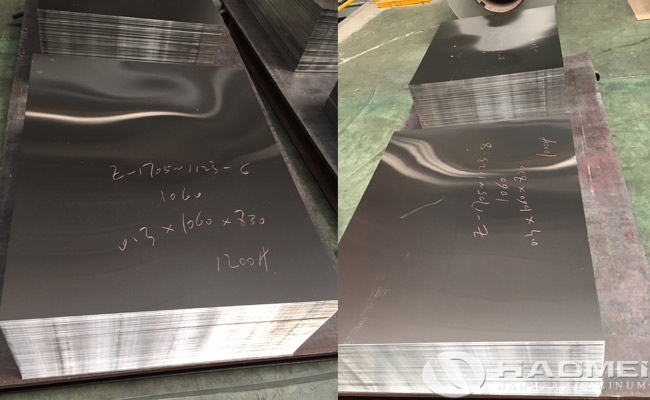
3003 and 5052 aluminum sheets both belong to the aluminum-manganese/aluminum-magnesium series of rust-resistant aluminum alloys, and are two of the most widely used non-heat-treated strengthened aluminum sheet materials in the industrial field. Both of them possess excellent corrosion resistance, machinability, and formability, and can achieve stable mechanical properties at room temperature without heat treatment. They are suitable for various processing techniques such as stamping, bending, and welding, and widely cover low- to mid-range applications in civilian, industrial, and aerospace sectors. Furthermore, 5052 and 3003 aluminum sheets both share the common characteristics of low density (approximately 2.7 g/cm³) and good electrical and thermal conductivity, making them preferred materials for lightweight structural designs. This is the fundamental advantage that allows them to occupy a significant market share.
- 1. Differences in core components and mechanical properties
From the perspective of core components, the difference in their alloy systems is the key to subsequent performance differentiation.
3003 aluminum sheet belongs to the Al-Mn alloy system, with manganese content controlled at 1.0%-1.5%, copper content ≤0.20%, and the remainder being aluminum matrix and trace impurities.
5052 aluminum sheet, on the other hand, is an Al-Mg alloy system, with magnesium content as high as 2.2%-2.8%, manganese content only 0.10%-0.40%, and no copper added.
This difference in composition directly leads to significant differences in mechanical properties:
3003 aluminum sheet has a tensile strength of 110-130 MPa, a yield strength of 40-60 MPa, and an elongation ≥20%;
5052 aluminum sheet has a tensile strength increased to 190-210 MPa, a yield strength of 90-110 MPa, and an elongation ≥15%.
It is evident that 5052 aluminum sheet far surpasses 3003 in strength, while 3003 aluminum sheet has a slight advantage in plasticity.
- 2. Differences in corrosion resistance and applicable media scenarios
While both possess rust-proof capabilities, their applicable media scenarios differ.
Due to the addition of manganese, 3003 aluminum sheet exhibits stable corrosion resistance in atmospheric, fresh water, and weakly acidic/alkaline environments, making it particularly suitable for applications involving contact with food and drinking water, meeting food-grade material requirements.
5052 aluminum sheet, strengthened by magnesium, possesses excellent atmospheric corrosion resistance, but also exhibits superior corrosion resistance in marine salt spray environments and industrial corrosive gas environments, with stronger resistance to stress corrosion cracking, making it suitable for harsh outdoor environments and marine engineering applications.
It should be noted that the corrosion resistance of 5052 aluminum sheet slightly decreases with prolonged use at high temperatures (above 150℃), while 3003 aluminum sheet exhibits better temperature stability and can be used for short periods in environments ≤180℃.
- 3. Differences in processing performance and application adaptability
These differences further refine the application scenarios.
3003 aluminum sheet has better plasticity, making it more suitable for deep drawing and spinning of complex shapes. It also boasts excellent weldability, employing various welding methods such as argon arc welding and spot welding, with minimal performance degradation after welding. It is commonly used in the manufacture of radiators, air conditioning ducts, and food packaging containers.
5052 aluminum sheet, due to its higher strength, is suitable for structural components bearing certain loads, such as automotive body panels, ship decks, and pressure vessel shells. However, its welding process requirements are slightly higher than 3003; heat input must be controlled during welding to prevent performance degradation due to grain growth in the heat-affected zone.
Furthermore, in terms of surface treatment, 3003 aluminum sheet produces a more uniform anodizing effect, making it suitable for decorative parts requiring surface coloring; 5052 aluminum sheet has a higher surface gloss and excellent polishing performance, making it suitable for appearance parts requiring high surface finish.
- 4. Selection recommendations
The core consideration is matching the performance requirements of the application scenario with the cost budget.
If the application scenario does not have high strength requirements, mainly involving plastic processing, food contact, or weakly corrosive environments at room temperature, and the budget is limited, 3003 aluminum sheet is the preferred choice due to its significant cost-effectiveness advantage.
However, if a certain load needs to be withstood, and the application is in harsh outdoor environments, marine engineering, or scenarios with specific structural strength requirements, even if the cost is slightly higher (5052 aluminum sheet is typically 15%-25% more expensive than 3003), 5052 aluminum sheet should be selected to ensure product reliability.
In actual selection, a comprehensive judgment should be made based on the specific processing technology, operating temperature, and environmental medium. If necessary, sample testing can be used to verify the material’s compatibility.
Maybe you like also
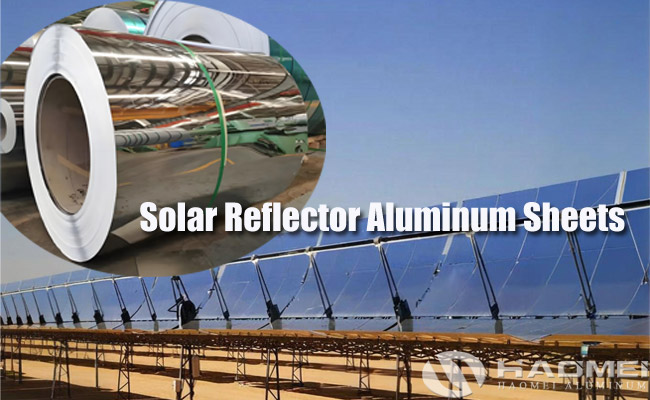 Solar Reflector Aluminum Sheets
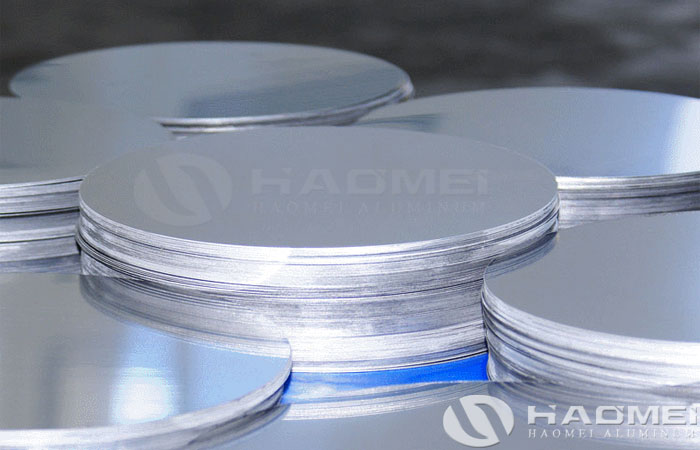 Aluminum Circles for Spinning
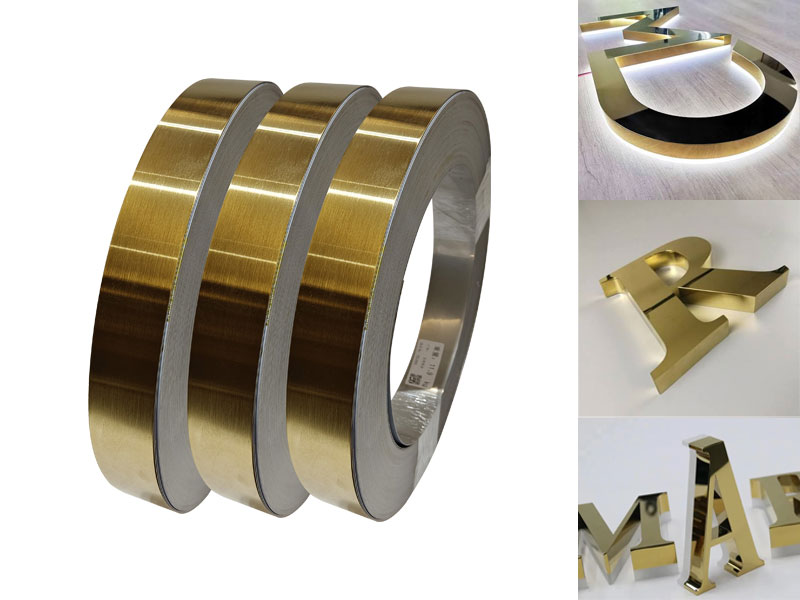 Gold Channel Letter Aluminum Coils
 Aluminum Roofing Coil Price (USD)
 Wholesale Mill Finish Aluminum Coil Factory
Copyright©2021 Haomei Aluminum Coil. All Rights Reserved. | Sitemap
 Nydia
Nydia
 Sales Manager