Welcome to the web of Haomei Aluminum


Wide Application of 3105 H14 Aluminum Sheet
January 4, 2026
3105 H14 aluminum sheet, a typical representative of Al-Mn series rust-resistant aluminum alloys, has become a preferred material for global industrial manufacturing, architectural decoration, and packaging containers due to its precise composition ratio and the excellent comprehensive performance imparted by the H14 heat treatment process. It uses 3105 aluminum alloy as the base material, which is rolled and then partially annealed to obtain the H14 condition. The core alloying element, manganese, is controlled at 1.0%-1.5%, supplemented with trace amounts of iron and silicon to optimize the structure. This process retains the lightweight characteristics of aluminum alloys while significantly improving rust resistance and processability, making it widely adaptable to different climates and industrial needs worldwide.
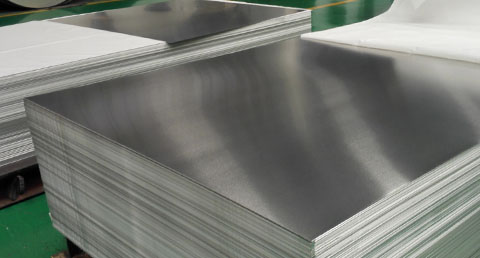
In terms of product characteristics, 3105 H14 aluminum sheet achieves a precise balance between mechanical and processing properties. Its tensile strength can reach 145-195MPa, yield strength ≥130MPa, elongation (50mm gauge length) ≥8%, and hardness (HB) ≤65. It can stably withstand certain loads at room temperature without easily deforming. Meanwhile, this material possesses excellent stamping, bending, and welding properties, allowing for the fabrication of complex components through various processing methods such as cold rolling, shearing, and stamping. The welded joint strength retention rate exceeds 85%, meeting the personalized processing needs of multiple industries. Furthermore, its corrosion resistance is outstanding; it exhibits no significant rust after 72 hours in a neutral salt spray test, far surpassing ordinary pure aluminum plates, making it suitable for complex environments such as marine climates and industrial pollution.
1. Construction Field: Ideal Material for Curtain Wall and Roofing Systems
3105 H14 aluminum sheet is an ideal material for curtain wall decoration and roofing systems. With a density of only 2.71 g/cm³, it is more than 35% lighter than steel, significantly reducing the building’s load-bearing capacity. It also possesses good wind pressure resistance, making it suitable for exterior wall decoration of high-rise buildings. For example, in a high-rise commercial complex project in Southeast Asia, 3105 H14 aluminum sheets were processed into curved curtain wall panels, with each panel measuring 1200×3000mm. Seamless splicing was achieved through bending and forming processes, ensuring the overall integrity of the building’s appearance. Furthermore, thanks to its resistance to damp heat corrosion, it has remained stable for over 10 years in high-temperature and high-humidity environments. In addition, this material is also commonly used in profiled roofing sheets, with a fatigue strength reaching 150MPa, capable of withstanding long-term wind and rain loads.
2. Industrial Manufacturing Sector: Core Lightweight Material for Automobiles and Home Appliances
The application of 3105 aluminum sheets covers core scenarios such as automotive parts and home appliance casings. In the trend of automotive lightweighting, this material is widely used in the manufacture of automotive fuel tanks, heat sinks, and other components. Its excellent stamping formability allows for one-time forming of complex curved surfaces in fuel tanks, and its welding sealing performance is excellent, with a leakage rate of less than 0.01 ml/h. Simultaneously, its thermal conductivity reaches 190 W/(m·K), which can improve heat dissipation efficiency by more than 20% in heat sink applications. In the home appliance industry, 3105H14 aluminum sheets are commonly used to manufacture refrigerator side panels and air conditioner outdoor unit casings. Its surface can be directly anodized and sprayed, achieving a coating adhesion level of Grade 1 and excellent scratch resistance, meeting the long-term use requirements of home appliances.
3. Packaging and Containers: Combining Food-Grade Safety and Forming Stability
3105 H14 aluminium sheet holds an important position due to its food-grade safety and forming stability. It complies with the GB 4806.1-2016 safety standard for food contact materials and can be used to manufacture beverage cans, food packaging foil substrates, etc. In the can production line of a European food group, 0.25mm thick 3105 H14 aluminum sheets are used to manufacture the can bodies through a stretch forming process. The forming time for a single can is only 0.8 seconds, and the can body has a compressive strength of 350kPa, meeting the strength requirements of subsequent sterilization and transportation. Furthermore, this material can also be used as a substrate for lithium battery casings; its excellent conductivity and processing precision allow it to meet the thin-wall requirements of lithium battery casings (minimum thickness as low as 0.1mm).
The diverse applications of 3105 H14 aluminum sheets stem from its precise material formulation and optimized processes. As a professional aluminum sheet manufacturer and exporter, we ensure the performance stability of each batch of products through strict component control and heat treatment processes. We can provide customized specifications (thickness 0.1-10mm, width 1000-2600mm) and processing services according to the different needs of customers worldwide, helping various industries achieve material upgrades and cost optimization.
Maybe you like also
 Solar Reflector Aluminum Sheets
 Aluminum Circles for Spinning
 Gold Channel Letter Aluminum Coils
 Aluminum Roofing Coil Price (USD)
 Wholesale Mill Finish Aluminum Coil Factory
Copyright©2021 Haomei Aluminum Coil. All Rights Reserved. | Sitemap
 Nydia
Nydia
 Sales Manager