Welcome to the web of Haomei Aluminum


How Are Brushed Aluminum Sheets Produced?
July 6, 2026
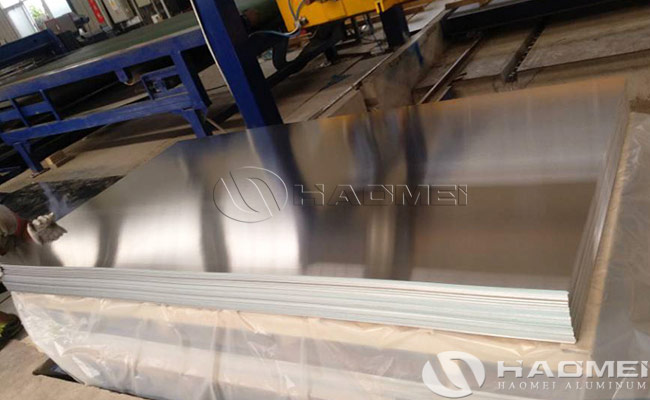
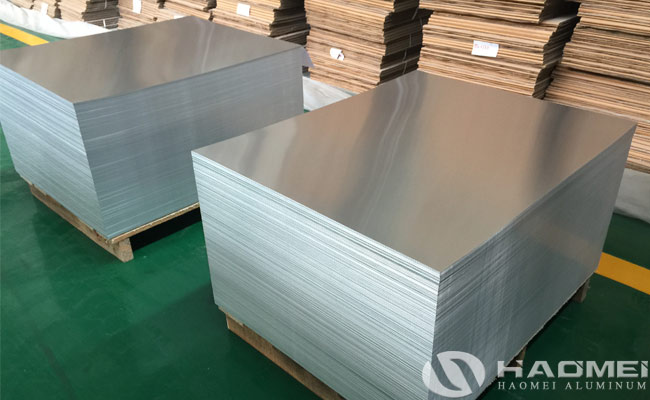
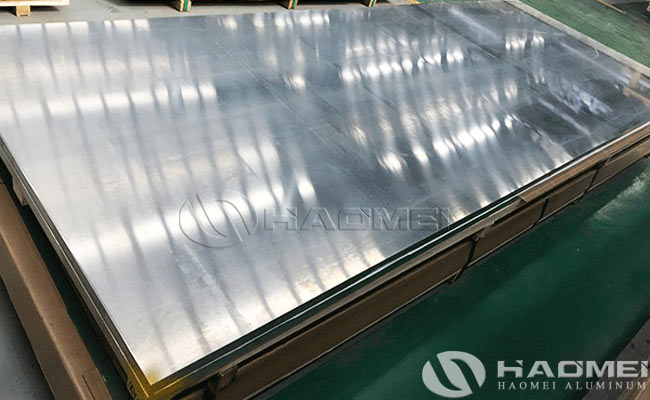
Brushed aluminum sheets are functional decorative materials that form directional textures on the surface of aluminum using physical or chemical methods. They retain the original metallic texture while possessing properties such as anti-slip, anti-fingerprint, and coverage of minor scratches. They are widely used in architectural decoration, electronic casings, industrial signage, and other fields. The production of brushed aluminum sheets is not a single grinding process, but a multi-stage precision process including pretreatment, texturing, post-treatment, and surface strengthening. The quality of the finished product highly depends on the parameter control of each process.
- Substrate Pretreatment: The Foundation for Flatness and Purification
The substrate for producing brushed aluminum sheets is mainly cold-rolled aluminum sheet, commonly using grades such as 1060 and 1070 pure aluminum and 5052 and 5005 rust-proof aluminum, with thicknesses ranging from 0.3 to 6.0 mm. Before entering the brushing process, a precision leveling machine is used to eliminate rolling internal stress and sheet shape defects, controlling the flatness of the entire sheet within 0.5 mm per meter to avoid uneven brushing depth and broken lines. The surface then enters the degreasing and cleaning line, where it is sprayed with an alkaline degreasing solution at 50-60℃ for 3-5 minutes to remove rolling oil and stains. Next, it undergoes neutralization and brightening with dilute nitric acid to remove the natural oxide layer. Finally, it is rinsed and dried with deionized water to ensure no residual impurities remain, providing a clean base for uniform wire drawing.
- Core Texture Forming Process: Precision Control of Mechanical Wire Drawing
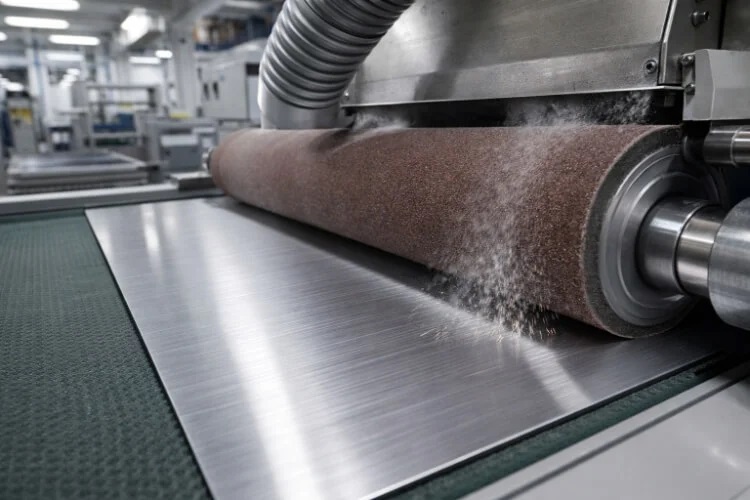
Industrial mass production primarily uses mechanical wire drawing, which is divided into two routes: belt abrasive drawing and roller brush drawing. Belt abrasive drawing is most widely used and suitable for large-area flat panel processing. Depending on the desired texture coarseness, different grits of abrasive belts (80-600 mesh) are selected: coarse wire drawing uses 80-180 mesh abrasive belts, achieving a texture depth of 15-20μm and a prominent three-dimensional effect; conventional fine wire drawing uses 240-400 mesh abrasive belts, controlling the texture depth to 8-12μm, resulting in a delicate feel; and ultra-fine matte wire drawing uses 500-600 mesh fine abrasive belts, with a texture depth of only 3-5μm. During production, the sheet material conveying speed is typically set at 3-8 m/min, coupled with constant belt tension, ensuring a surface grain depth deviation of ≤2 μm. Besides conventional straight-grain brushing, special effects such as random patterns, wavy patterns, and cross patterns can be achieved by adjusting the roller brush eccentric speed and trajectory. For straight-grain brushing, the grain direction deviation must be controlled within 2° to ensure visual consistency.
- Post-treatment and Surface Strengthening: A Closed Loop from Texture to Finished Product
After brushing, a large amount of aluminum powder and abrasive debris remain on the sheet surface. It requires high-pressure spraying and ultrasonic cleaning, with the water temperature controlled at 40-50℃, followed by hot air drying at 80-100℃ to prevent water stains. To prevent oxidation and blackening of the semi-finished product and improve the adhesion of subsequent coatings, a chromium-free passivation treatment is performed after cleaning, generating a 1-3 μm thick chemical conversion film. For products requiring weather resistance and corrosion resistance, further processes such as anodizing, electrophoresis, or spraying can be added. Anodizing generates a dense oxide film of 5-25μm, which, after sealing, significantly improves corrosion resistance and color stability.
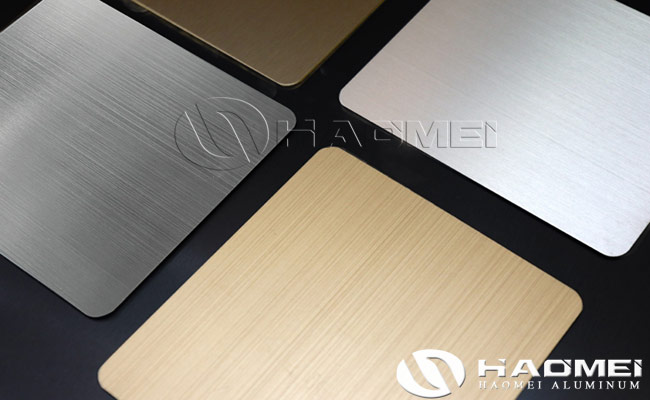
The final brushed aluminum sheet product undergoes a full inspection for texture consistency, surface defects, and dimensional accuracy. The color difference ΔE ≤ 1.5, and there must be no defects such as missed threads, skipped threads, or penetrating scratches. Dimensional tolerances are controlled within thickness ±0.05mm and length and width ±0.3mm. After lamination and packaging, it is ready for shipment. Throughout the entire process, the cleanliness of pretreatment, the stability of drawing parameters, and the sealing performance of post-treatment collectively determine the quality of the finished product and are the core factors that differentiate products from different manufacturers.
Maybe you like also
 Aluminum Roofing Coil Price (USD)
 Wholesale Mill Finish Aluminum Coil Factory
 Tempers of 6061 Aluminum Sheet
 6061 Aluminum Sheet Properties
 What Is 6061 T6 Aluminum Used For?
Copyright©2021 Haomei Aluminum Coil. All Rights Reserved. | Sitemap
 Nydia
Nydia
 Sales Manager