Welcome to the web of Haomei Aluminum


6061 Aluminum Sheet Properties
September 14, 2026
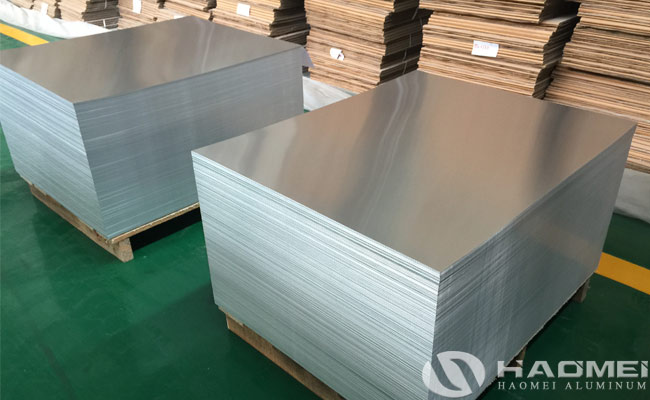
6061 aluminum sheet belongs to the heat-treatable Al-Mg-Si alloy series and is one of the most widely used general-purpose structural aluminum materials in the industry. Haomei Aluminum produces 6061 aluminum plates in strict accordance with international standards such as ASTM B209 and EN 485. Through precise control of alloy composition and heat treatment processes, the material achieves a comprehensive balance of mechanical properties, machinability, and weather resistance. Its performance spans a full spectrum of tempers—from soft annealed to peak-aged—catering to the diverse requirements of various operating conditions. In industrial practice, the core advantage of 6061 aluminum alloy lies in meeting the comprehensive performance demands of the vast majority of industrial applications at a moderate cost; this is the fundamental reason it has become an industrial benchmark material.
Mechanical Properties:
Mechanical properties are the core indicators for 6061 aluminum sheet, exhibiting distinct variations based on the delivery temper.
The O-temper (fully annealed) aluminum sheet features a tensile strength of 120–150 MPa, yield strength ≤60 MPa, elongation ≥25%, and Brinell hardness of approximately 30–40 HB; it offers optimal plasticity but relatively low strength.
The T4 temper (solution heat-treated and naturally aged) offers a tensile strength of 205–260 MPa, yield strength ≥110 MPa, and elongation ≥16%; balancing strength with forming toughness, it is a common choice for welded structures.
The T6 temper (solution heat-treated and artificially peak-aged) is the most widely used high-strength industrial state, with tensile strength consistently between 265–320 MPa, proof stress (0.2% offset) ≥245 MPa, elongation ≥8%, and Brinell hardness of 90–120 HB; its strength approaches that of ordinary low-carbon steel, yet its weight is only 34% of the latter.
The T651 temper builds upon T6 by adding a 1%–3% pre-stretching process for stress relief; while mechanical properties remain essentially the same as T6, internal residual stress is reduced by over 70%, and planar deformation after machining is ≤0.05 mm/m, making it the preferred temper for precision structural components and molds.
Processing Properties:
Processing properties determine a material’s suitability for production, and 6061 aluminum sheet performs exceptionally well across mainstream manufacturing processes.
Regarding machinability, the 6061 aluminum alloy offers stable cutting characteristics—free from issues like tool adhesion or built-up edge formation—and boasts cutting efficiency more than 30% higher than that of ordinary carbon steel; it consistently achieves a surface roughness of Ra 1.6 μm during finishing, eliminating the need for additional polishing.
In terms of weldability, the T4 temper offers the best adaptability, supporting TIG, MIG, and laser welding, with joint strength retention reaching 75%–80% when using 5356 filler wire; the T6 temper experiences some strength reduction in the heat-affected zone, making it better suited for applications involving extensive integral machining.
Regarding formability, the O and T4 tempers are suitable for processes such as bending and shallow drawing, with a minimum bending radius of 1.5 times the plate thickness; the T6 temper has lower ductility and supports only simple, low-angle bending.
Regarding surface treatment, the anodic oxide layer on 6061 aluminum is dense and uniform with excellent color consistency; standard oxide layer thicknesses range from 5 to 25 μm, and the material withstands over 1,000 hours of neutral salt spray testing, offering both protective and decorative qualities.
Corrosion Resistance and Physical Properties:
Corrosion resistance and physical properties are fundamental to long-term service reliability.
Regarding corrosion resistance, the uniform distribution of magnesium-silicon precipitates in the 6061 aluminum alloy results in a low tendency for intergranular corrosion; it exhibits excellent weather resistance in industrial atmospheres and inland environments, with a long-term outdoor service life exceeding 20 years. While its salt spray resistance is slightly lower than that of Al-Mg alloys like 5052, it can meet the requirements of most coastal applications through anodizing or coating treatments.
In terms of physical properties, 6061 aluminum has a density of 2.70 g/cm³, a room-temperature thermal conductivity of approximately 167 W/(m·K), an electrical conductivity of about 43% IACS, and a linear expansion coefficient of 23.6 × 10⁻⁶/°C. Its thermal conductivity far exceeds that of steel, making it an ideal choice for heat-dissipating structural components.
Haomei Aluminum3s 6061 aluminum sheets are available across the full range of tempers and thicknesses. Every production batch undergoes spectral analysis for chemical composition and sampling tests for mechanical properties, with performance variations within the same batch controlled to under 5%. This ensures stable, controllable quality suitable for diverse applications ranging from precision machining to structural engineering, making it a cost-effective choice for industrial clients worldwide seeking lightweighting solutions.
Maybe you like also
 What Is 6061 T6 Aluminum Used For?
 Aluminum Coil 3105 H18 RAL 9016
 Polar White Aluminum Sheet
 3005 Color Coated Aluminum Coil
Copyright©2021 Haomei Aluminum Coil. All Rights Reserved. | Sitemap
 Nydia
Nydia
 Sales Manager