Welcome to the web of Haomei Aluminum


Marine-Grade Aluminum 5052 VS 5083
November 23, 2026
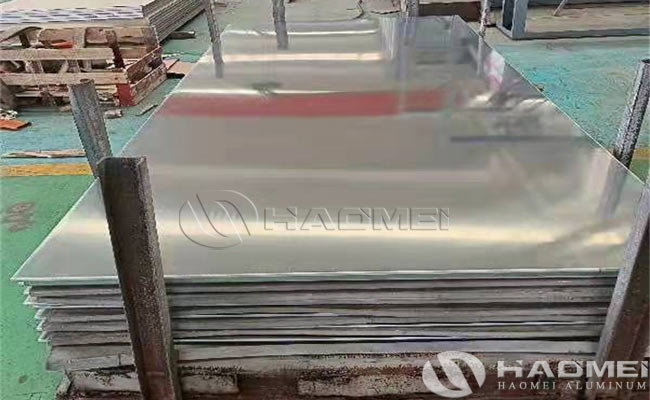
Both 5052 and 5083 belong to the Al-Mg (aluminum-magnesium) series of non-heat-treatable alloys. They offer excellent corrosion resistance and weldability, making them suitable for use in marine vessels and offshore environments. However, they differ in terms of strength, common tempers, and typical applications. For primary hull structures, components exposed to long-term seawater immersion, and highly loaded welded structures, aluminum 5083 is generally the preferred choice. In contrast, aluminum 5052 is more commonly used for interior cabins, decorative elements, auxiliary components, and general sheet metal fabrications.
Differences in Chemical Composition and Strength
Marine grade aluminum 5052 contains approximately 2.2%–2.8% magnesium, along with a small amount of chromium. It offers moderate strength, good formability (bending properties), and stable resistance to atmospheric corrosion. Common tempers include O, H32, and H34.
Marine grade aluminum 5083 contains a higher magnesium content—typically 4.0%–4.9%—along with elements such as manganese (Mn) and chromium (Cr). It generally provides superior strength and better resistance to seawater corrosion compared to 5052. For marine applications, aluminum 5083 is frequently supplied in tempers such as H116, H321, and H111; specifically, the H116 and H321 tempers are often used for marine-grade aluminum plates where it is critical to mitigate the risks of exfoliation and intergranular corrosion.
Specific requirements regarding chemical composition, mechanical properties, and material temper should be determined in accordance with ASTM B928/B928M, ASTM B209/B209M, EN 485, EN 573, or the technical specifications for the specific marine project.
Corrosion Resistance and Performance in Seawater Environments
Marine grade aluminum 5052 exhibits good corrosion resistance in general marine atmospheres, humid environments, and for non-critical marine components; it is suitable for structural or decorative applications that are not subject to long-term immersion or high mechanical loads.
Due to its higher magnesium content, marine grade aluminum 5083 generally offers superior resistance to seawater corrosion and greater structural strength. It is suitable for use in hull plating, decks, bulkheads, bottom plating, superstructures, and welded structures for marine engineering. For 5xxx-series marine grade aluminum alloys intended for long-term service in seawater, careful consideration must be given to operating temperatures, stress states, and material tempers; prolonged exposure to inappropriately high temperatures can lead to sensitization-related corrosion risks in Al-Mg alloys.
Welding and Fabrication Characteristics
Both marine grade aluminum 5052 and 5083 are suitable for welding via methods such as MIG and TIG. Alloy 5052 offers excellent formability and bendability, making it well-suited for the fabrication of complex sheet metal components, whereas 5083 is better suited for the construction of hulls and load-bearing structures that require high post-weld strength.
The high-strength condition of 5083 typically results in more pronounced springback during forming, necessitating stricter control over bend radii, welding heat input, and fabrication processes. Filler materials such as 5183 or 5356 may be selected based on design requirements; however, the final choice should be governed by the Welding Procedure Specification (WPS) and Procedure Qualification Record (PQR).
Comparison of Typical Marine Applications
| Item | 5052 Aluminum Alloy | 5083 Aluminum Alloy |
| Strength Level | Moderate | Higher |
| Seawater Corrosion Resistance | Good | Better suited for harsh marine environments |
| Common Tempers | O, H32, H34 | H111, H116, H321 |
| Typical Uses | Cabin panels, interior fittings, equipment enclosures, fuel tanks, and auxiliary sheet metal components | Hull plating, decks, bulkheads, bottom plating, and superstructures |
| Suitability for Main Hull Structures | Subject to design evaluation | A preferred material choice |
When procuring marine grade aluminum plates, specify the alloy, temper, thickness, dimensions, surface finish, ultrasonic testing requirements, corrosion testing, and any necessary classification society documentation. Haomei Aluminum offers 5052 and 5083 marine grade aluminum plates, sheets, coils, and cut-to-size products. We can also assist in determining the optimal material specifications and export packaging requirements based on the intended use for hull structures or auxiliary components.
Maybe you like also
 Aluminum Sheet For Boat Deck
 Cold Rolled VS Hot Rolled Aluminum Coils
 What Are Cold-Rolled Aluminum Coils?
 What Is Hot Rolled Aluminum Coil?
Copyright©2021 Haomei Aluminum Coil. All Rights Reserved. | Sitemap
 Nydia

 Sales Manager