Welcome to the web of Haomei Aluminum


What Are Cold-Rolled Aluminum Coils?
November 10, 2026
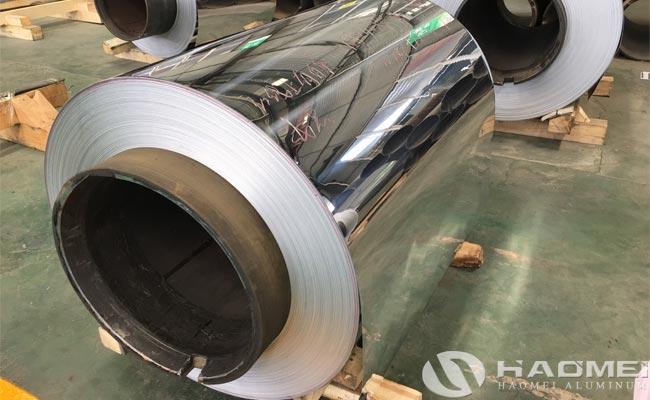
Cold rolled aluminum coils are aluminum or aluminum alloy materials produced by suitable aluminum stock and reducing their thickness through multiple rolling passes at or near room temperature. Unlike hot rolling, which relies on high-temperature plastic deformation, the cold rolling process causes work hardening in the material. Consequently, additional steps—such as intermediate annealing, final annealing, tension leveling, slitting, or edge trimming—are typically required to achieve the desired thickness, temper (material state), and flatness.
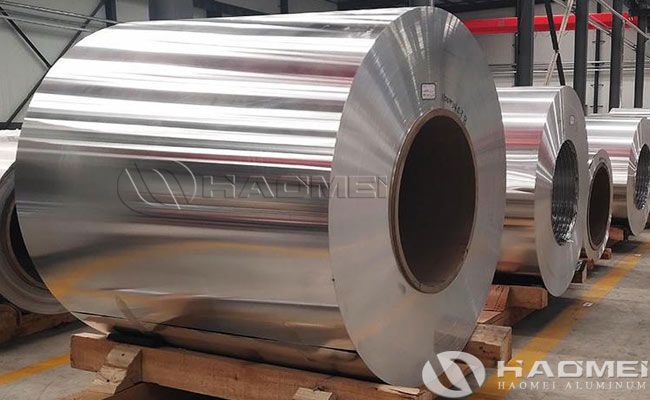
Cold-rolled aluminum coils serve as a vital raw material for aluminum sheets, strips, discs, foils, color-coated aluminum coils, and various stamped components. They are widely used across industries including packaging, architectural decoration, transportation, home appliances, electronics, cabling, cookware, and machinery manufacturing.
Typical Production Process for Cold-Rolled Aluminum Coils
The standard production workflow for cold rolled aluminum coils includes:
– Stock Preparation: Selecting hot-rolled or cast-rolled coils and inspecting their surface quality, flatness, and chemical composition.
– Cold-Rolling (Thickness Reduction): Passing the coil through a cold-rolling mill multiple times to achieve the target thickness.
– Intermediate Annealing: For products requiring a high total reduction ratio, annealing is performed to restore plasticity, facilitating further rolling.
– Final Annealing or Stabilization: Processing the material to achieve specific tempers, such as O, H14, H16, H18, H24, or H32.
– Finishing: Processes such as tension leveling, cleaning, edge trimming, slitting, protective film application, cutting to length, or further sectioning.
The specific process route may vary depending on the alloy type. The rolling reduction ratios, annealing protocols, and final performance requirements vary across 1xxx, 3xxx, 5xxx, and 8xxx series aluminum coils.
Key Characteristics of Cold-Rolled Aluminum Coils
– Consistent Thickness Tolerance
Cold rolling enables the production of thinner aluminum coils with highly stable thickness control. Typical thicknesses for cold-rolled aluminum coils range from approximately 0.20 mm to 6.0 mm; thinner materials can be further processed into aluminum foil stock or finished aluminum foil. The specific thickness range available depends on the alloy, coil width, and the capabilities of the rolling mill.
– Superior Surface Quality
Following cold rolling and finishing, the surface of aluminum coils is generally smooth and uniform, making it suitable for downstream processes such as coating, lamination, anodizing, printing, stamping, and lamination/bonding. Applications requiring a mirror finish, brushed texture, color coating, or high-grade surface quality undergo additional specialized surface treatments and rigorous quality control.
– Flexible Temper Selection
Cold rolling increases the strength and hardness of the material while reducing its elongation. Through varying degrees of work hardening and annealing, materials can be supplied in soft (annealed), half-hard, or hard tempers. For instance, the O-temper (fully annealed) is ideal for deep drawing, stretching, and bending, while tempers such as H14 or H18 are suited for products requiring greater rigidity, strength, or flatness.
Common Alloys and Applications
1050, 1060, 1100: Used for reflectors, signage, chemical processing equipment, general stamped parts, and conductive components.
3003, 3004, 3105: Used for cookware, architectural coils, storage tanks, air conditioning components, and substrates for color-coated products.
5052, 5083, 5754: Used in transportation, tank manufacturing, marine components, corrosion-resistant structures, and protective (armoring) strips.
6061, 6063, 6082: Suitable for various mechanical and structural applications; the specific supply temper and dimensions are determined in conjunction with the required heat treatment processes.
8011, 8079, and 1235: Commonly used as raw materials for the production of aluminum foil and packaging materials.
Differences Between Cold-Rolled and Hot-Rolled Aluminum Coils
Hot rolling is primarily used to process ingots into thicker coils or slabs, while cold rolling is employed to further reduce thickness, enhance dimensional accuracy, and improve surface quality. Cold-rolled aluminum coils typically feature tighter thickness tolerances and a superior surface finish; however, their final formability remains dependent on their annealed state and material microstructure.
When purchasing cold rolled aluminum coils, it is essential to specify the alloy, temper, thickness, width, core size, coil weight, surface requirements, intended downstream processing, and applicable technical standards. Haomei Aluminum offers cold rolled aluminum coils in the 1xxx, 3xxx, 5xxx, and 8xxx series, with additional services available—including slitting, cut-to-length processing, protective film application, and moisture-proof export packaging.
Maybe you like also
 What Is Hot Rolled Aluminum Coil?
 1050 H16 Aluminum Sheet
 1050 H14 Aluminum Sheet
 1085 Mirror Aluminum Sheet Coil
Copyright©2021 Haomei Aluminum Coil. All Rights Reserved. | Sitemap
 Nydia

 Sales Manager